


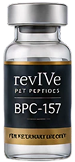
BPC-157 Tissue Recovery & Gastrointestinal Support
BPC-157 is a synthetic peptide derived from a naturally occurring gastric protein. Preclinical research suggests it may support angiogenesis, tissue remodeling, collagen organization, and the body’s natural recovery processes.
- Active Dogs
- Senior Pets
- Joint Discomfort
- Tendons & Ligaments
- Soft Tissue Recovery
- Gastrointestinal Support
- Active Dogs
- Senior Pets
- Joint Discomfort
- Tendons & Ligaments
- Soft Tissue Recovery
- Gastrointestinal Support
Recover
Support healing and repair
Restore
Enhance tissue regeneration
Rebuild
Strengthen connective tissue
Revitalize
Support gut health
How It Works
BPC-157 works by promoting angiogenesis (formation of new blood vessels), enhancing collagen synthesis, and supporting the natural healing of muscles, tendons, ligaments, and gastrointestinal tissues.
Injury or Inflammation
Increased Blood Flow
Tissue Repair Activated
Stronger, Healthier Tissue
Potential Benefits
- Supports tendon and ligament health
- Promotes soft tissue and muscle recovery
- Supports joint comfort and mobility
- Gastrointestinal muscles support
- Helps maintain overall wellness
- Support the body’s natural healing processes
The Science
BPC-157 has been studied extensively in preclinical models for its ability to promote healing in a wide range of tissues.
It interacts with growth factors and signaling pathways involved in:
Angiogenesis
Collagen synthesis
Fibroblast migration
Anti-inflammatory pathways
Tissue remodeling
BPC-157 Inftroduced
Stimulates angiogenesis
Enhances collagen synthesis
Modulates inflammation
Aids tissue regeneration
Improved function & mobility
Research Highlights
Shown to promote healing of tendons and ligaments in animal models.
– Journal of Orthopaedic Research, 2017
Supports gastrointestinal mucosal integrity and ulcer healing in preclinical studies.
– Digestive Diseases and Sciences, 2014
Demonstrated angiogenic and anti-inflammatory properties.
– Frontiers in Pharmacology, 2020
May support recovery in muscles, nerves, and other soft tissues.
– Multiple preclinical studies.

Why Injectable?
Oral peptides are vulnerable to degradation by stomach acid and digestive enzymes, which can significantly reduce their bioavailability.
Subcutaneous (injectable) delivery allows the peptide to bypass the digestive system for more predictable absorption and systemic availability.
Oral Delivery
- Low bioavailability
- Degraded in stomach
- Less predictable
Injectable Delivery
- Higher bioavailability
- Bypasses digestion
- More predictable
Dosing & Administration?
(General Guidelines)
Dosing should always be determined by a licensed veterinarian based on the pet’s weight, age, condition, and response to therapy.
- Route: Subcutaneous (SQ)
- Frequency: Typically 1–2 times per day
- Reconstitution: Bacteriostatic Water
For veterinary use only. Not for human use.
Frequently Asked Questions
Q: Is BPC-157 safe for long-term use in pets?
A: Preclinical studies suggest a favorable safety profile, but long-term use should be under veterinary supervision.
Q: How soon can I see results?
A: Response times vary. Some pets may show improvement in a few days, while others may require several weeks
Q: Can BPC-157 be used with other therapies?
A: Yes, it is commonly used as part of a comprehensive treatment plan. Always consult your veterinarian.
Q: Is this FDA-approved?
A: BPC-157 is not FDA-approved for any use in animals. It is an investigational compound.
Pharmaceutical Grade
Sterile - High Purity - Lab Tested
COLD Chain Protected
Maintained from lab to your door
Veterinarain Guided
Professional support for your pet