

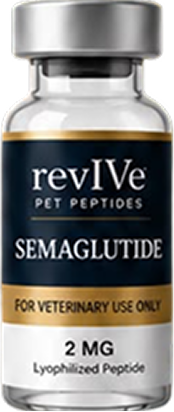
SEMAGLUTIDE Veterinary Weight Management

Semaglutide is a GLP-1 receptor agonist originally developed for human medicine and now used in veterinary weight management programs under the direction of a licensed veterinarian.

Weight Loss

Supports healthy weight reduction

Appetite Control

Helps reduce hunger and cravings

Improved Mobility

Less weight means greater mobility

Metabolic Health

Supports healthy metabolism

Quality of Life

Helps pets live longer, healthier livesz

How It Works

Semaglutide mimics the action of the naturally occurring hormone GLP-1 (glucagon-like peptide-1). It binds to GLP-1 receptors in the brain and digestive system to regulate appetite, slow gastric emptying, and improve metabolic function.

Semaglutide Introduced
Binds to GLP-1 Receptors
Reduces Appetite & Food Intake
Promotes Weight Loss & Benefits

Potential Benefits

The Science

Semaglutide is a long-acting GLP-1 receptor agonist with demonstrated efficacy in multiple species. Studies in dogs and cats have shown:

Research suggests it may:

Significant weight loss
Reduced appetite
Improved body condition scores
Better glycemic control in diabetic patients
Improved inflammatory and metabolic markers
GLP-1 receptor agonists such as semaglutide represent a significant advancement in veterinary obesity medicine, offering effective weight loss and metabolic benefits with a well-established safety profile when used appropriately.
Journal of Veterinary Internal Medicine, 2021
Semaglutide (Synthetic GLP-1 RA)
Binds to GLP-1 Receptors in Brain & Gut
Decreases Hunger Signals to Brain
Slows Gastric Emptying
Reduces Food Intake & Promotes Weight Loss
Improved Metabolic Health & Mobility

Research Highlights

Semaglutide induces significant weight loss in obese dogs.

BMC Veterinary Research, 2019

Improves body condition score and reduces waist circumference in dogs

Frontiers in Veterinary Science, 2020

Effectively reduces appetite and food intake in cats.

JAVMA, 2021

Improves glycemic control in diabetic dogs and cats.

Veterinary Therapeutics, 2022

Well tolerated with a low incidence of adverse effects.

Veterinary Clinical Pharmacology, 2021

Why Injectable?

Oral semaglutide is not bioavailable in animals due to degradation in the gastrointestinal tract. Subcutaneous (injectable) delivery provides consistent absorption, higher bioavailability, and more predictable clinical results.

Oral Delivery

Injectable Delivery

Dosing & Administration?

(General Guidelines)

Dosing should be determined by a licensed veterinarian based on the pet’s weight, body condition, and response to therapy.

For veterinary use only. Not for human use.

Frequently Asked Questions

Q: How soon can I see results?

A: Some pets may show reduced appetite within days. Weight loss is typically observed over several weeks.

Q: Is semaglutide safe for long-term use?

A: When used under veterinary supervision, semaglutide has a well-established safety profile.

Q: Can semaglutide be used with other therapies?

A: Yes, it can be combined with diet, exercise, and other medications as part of a comprehensive plan.

Q: Are there side effects?

A: Possible side effects may include nausea, vomiting, or decreased appetite initially. These are typically mild and transient.

Q: Is this FDA-approved?

A: No. Semaglutide is not FDA-approved for use in animals. It is an investigational compound.

10 MG
VIAL

Store refrigerated. Do not freeze.

Protect from light.

Keep out of reach of children and pets.

Pharmaceutical Grade

Sterile - High Purity - Lab Tested

COLD Chain Protected

Maintained from lab to your door

Veterinarain Guided

Professional support for your pet